
If you’ve been searching for pond construction near me in Western New York, there’s a good chance you’re not thinking about a small decorative water feature. You’re likely envisioning something bigger — a large, natural-looking pond that becomes the centerpiece of your property.
Large ponds are much different then small koi ponds and water features. They require more excavation, more drainage planning, stronger structural support, and serious consideration of Western New York’s clay soil and winter weather. Whether you’re building a recreational pond, a large ecosystem pond, or a multi-use landscape pond, the construction process is more involved than most homeowners realize.
In Western New York, factors like heavy clay soil, lake-effect rain, snowmelt, and freeze-thaw cycles can make or break a large pond project. In this guide, we’ll walk through what large-scale pond construction entails, what makes it unique in this region, and how to ensure your investment lasts for decades.
Why Large Ponds Are Growing in Popularity in Western New York
All across Buffalo, Rochester, Olean, Jamestown, and surrounding areas, homeowners with larger properties are investing in expansive water features. These large ponds can offer:
• A dramatic focal point for acreage properties
• Natural wildlife habitat
• Space for recreation or gathering
• Increased property value
• A peaceful, estate-style aesthetic
Large ponds often serve many exciting purposes. They may include swimming areas, a peaceful place for relaxation, a great water source, islands, unique overflow systems, vast ecosystems for fish and wildlife, and much more.
But with greater size comes greater responsibility in design and engineering.
What Makes Large Pond Construction Different
Large pond construction requires proper experience and proper planning. The engineering considerations are much more significant.
Extensive Site Evaluation
With large ponds, contractors must evaluate:
• Overall property grading
• Natural water flow patterns
• Soil composition across a wide footprint
• Proximity to structures
• Drainage impact on neighboring properties
In Western New York, this step is especially important because having clay soil and seasonal runoff can dramatically affect a large excavation.
Significant Excavation and Equipment
Large ponds require heavy machinery and precise grading. Excavation must account for:
• Proper grading and slope
• Deep zones for temperature stability
• Structural integrity across the pond
• Safe access points
Improper grading in a large pond can lead to shoreline collapse or long-term erosion.
Building Large Ponds in Western New York Clay Soil
Clay soil is one of the biggest factors affecting large pond construction in this region. It also happens to be one of the most ideal soil types for building a long-lasting, stable pond.
Why Clay Soil Matters More in Large Ponds
Clay:
• Expands when saturated
• Shrinks during dry spells
• Holds water for long periods
• Drains slowly
Clay soil is very common throughout Western New York due to glacial deposits left behind thousands of years ago. While it can be challenging to excavate and shape when it is wet, clay is actually beneficial for pond construction because it naturally retains water and provides a dense, supportive base.
When properly prepared, heavy clay soil can help stabilize a large pond and reduce water loss over time.
How Western New York Weather Affects Pond Construction
Western New York weather has a direct impact on large pond construction. Heavy rain, lake-effect snow, and rapid spring thaws often leave the ground highly saturated. When clay gets wet, it becomes dense, sticky, and difficult to excavate, making grading and proper compaction more challenging for contractors.
Spring and fall are usually the toughest seasons, as snowmelt and steady rain can create soft, muddy conditions that require careful timing and site management.
Summer is often the ideal time for pond construction. Warmer temperatures and drier soil conditions make excavation cleaner, grading more precise, and compaction more reliable. Building during stable summer weather helps ensure the pond’s foundation is solid and properly prepared to handle Western New York’s seasonal changes.
Designing Overflow Systems for Large Ponds in Western New York
Overflow planning becomes even more important with large ponds.
Western New York experiences:
• Intense lake-effect snow
• Rapid spring snowmelt
• Heavy summer rainstorms
A large pond can potentially collect huge amounts of water during these events.
What Happens Without Proper Overflow Design?
Without controlled drainage, a large pond can:
• Flood surrounding landscape
• Erode large sections of yard
• Create water channels or ditches
Water will always find a path — it’s better to design that path intentionally.
Overflow Strategies for Large Ponds
Professional pond construction near me searches in Western New York should lead you to contractors who understand these systems.
Common solutions include:
Engineered Spillways or Riprap
Built at precise elevations to safely direct excess water.
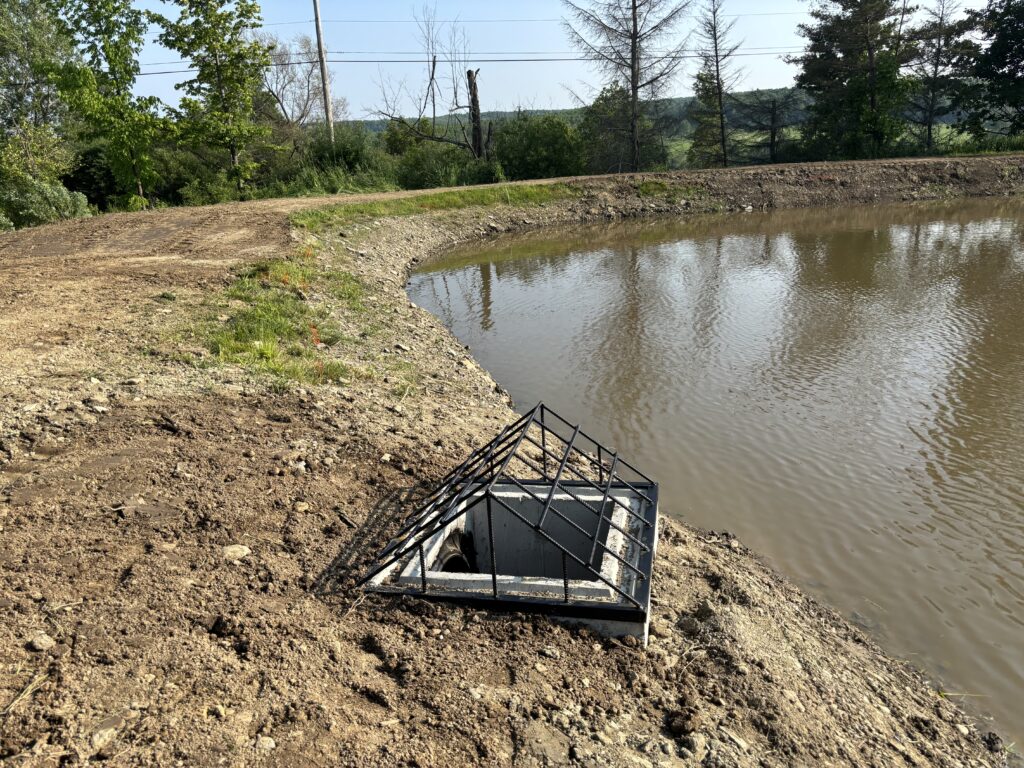
Catch Basins or Overflow Pipes
Designed to handle high water flow if necessary.
Drainage Swales
Landscaped channels that guide water away naturally.
Integration with Property Drainage
Every overflow system should work in tangent with existing property drainage.
For large ponds, overflow planning isn’t optional — it’s foundational.
Winter Considerations for Large Ponds
When properly designed and winterized, a large pond can handle Western New York’s harsh conditions and restart smoothly in spring.
Key Things to Remember When Building a Pond for Winter
• Adequate Depth of 5+ feet to protect fish from freezing temperatures
• Overflow systems designed with ice in mind
• Properly excavated edges to handle soil expansion and contraction
Winter is a completely natural part of a pond’s yearly cycle and actually helps with pond health.
Erosion Control for Large Ponds
Larger ponds are much more susceptible to problems caused by erosion
Make sure your contractor properly:
• Designs and installs a suitable overflow
• Accounts for existing property water patterns
• Properly grades the area to a suitable slope
• Recommends proper vegetation to help with erosion
Erosion prevention protects both the pond and the surrounding landscape.
Cost Factors for Large Pond Construction in WNY
Large pond construction is a significant investment. Costs depend on:
• Size and depth
• Excavation complexity
• Soil conditions
• Drainage and overflow systems
• Location
Because of clay soil and winter climate considerations, Western New York projects often require additional preparation compared to milder regions.
However, when done correctly, large ponds add long-term property value and create a standout landscape feature.
Choosing the Right Contractor for Large Pond Construction
If you’re searching for pond construction near me for a large project, look for contractors who:
• Have experience with acreage-scale ponds
• Understand Western New York soil conditions
• Can explain overflow engineering clearly
• Provide examples of large completed projects
• Address winter durability upfront
Large ponds demand both design skill and structural planning.
Final Thoughts on Large Pond Construction in Western New York
Large pond construction in Western New York isn’t just about aesthetics — it’s about engineering for soil, weather, and long-term durability.
From clay soil stabilization and shoreline grading to engineered overflow systems and winter preparation, every detail matters. A large pond collects more water, interacts with more soil, and experiences greater environmental stress.
When properly designed and constructed, a large pond becomes the defining element of your property — a place for gathering, relaxing, and enjoying nature year after year.
If you’re considering a large pond project, take time to work with experienced professionals who understand Western New York conditions. With the right planning, your pond won’t just look impressive — it will be built to handle everything our climate throws at it.